War correspondent Richard Tregaskis (1916-1973) provided extensive coverage of the Vietnam War, building on his fame from covering World War II and writing Guadalcanal Diary (1943). He reported in Vietnam for a decade, accompanying U.S. Marines and ARVN troops through combat missions, resulting in Vietnam Diary (1963), one of the first definitive eyewitness accounts of American combat in Vietnam. His papers contain multiple diaries from his trips to Vietnam between 1962-1972, manuscript drafts, research files, correspondence with military officials, and many photographs depicting combat operations and Vietnamese society.
Additional content for this collection can be found in the "Inventory for collection."
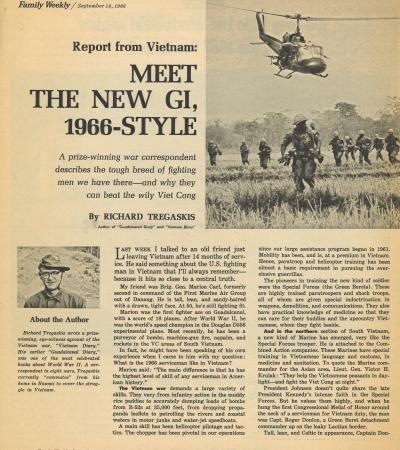
"Report from Vietnam: Meet The New GI, 1966-Style" by Richard Tregaskis, Family Weekly, September 18, 1966
In this article, Tregaskis describes the experiences, skills, and mindset of U.S. servicemen fighting in Vietnam. He highlights the diverse abilities required—from helicopter piloting to counter-guerrilla tactics—and features vivid examples of individual bravery, such as Green Berets and Marines working closely with Vietnamese forces.
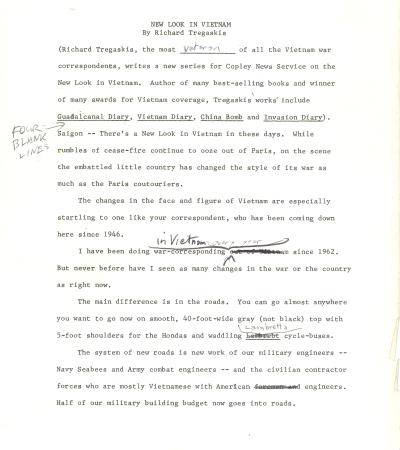
"The New Look In Vietnam" by Richard Tregaskis
This is a draft of a three part article for Copley News Service. It describes changes the author has observed in Vietnam over the later years of the Vietnam War. It makes special note of the building of new roads, bases, and infrastructure by American and Vietnamese workers. These projects improved transportation and created job opportunities—many of them for women, who worked as builders, contractors, and business owners.
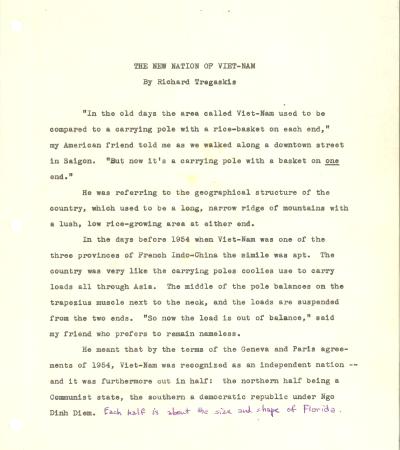
"The New Nation Of Viet-Nam" by Richard Tregaskis
This article was written about Vietnam before American involvement in the Vietnam War. The author reports on South Vietnam's efforts to become a modern state, free from France's colonial empire. He also describes his trip by jeep from Saigon to the northern part of the country.
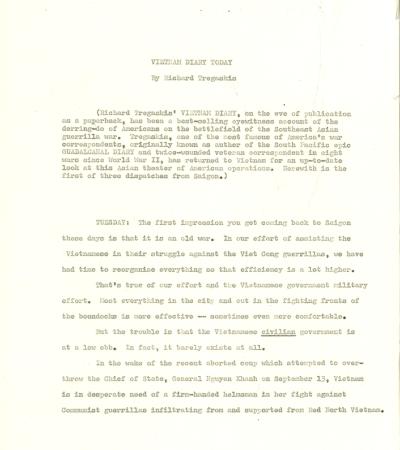
"Vietnam Diary Today" by Richard Tregaskis
This document is a first-hand account of Tregaskis' observations in Vietnam. It details the contrast between increasing U.S. military efficiency and the political instability of South Vietnam’s government, as well as the Viet Cong’s growing reliance on younger, less experienced fighters. Through battlefield observations, Tregaskis shows both the heavy costs of war and signs that the Viet Cong may be weaken
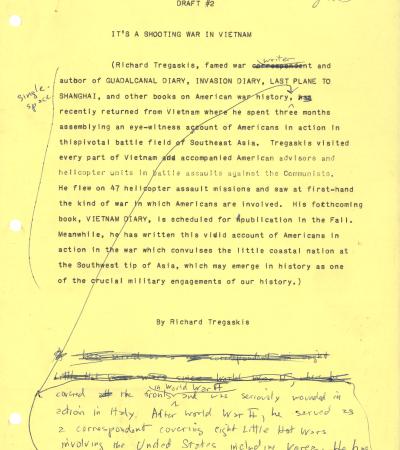
"It's A Shooting War In Vietnam" by Richard Tregaskis
In this draft article, Tregaskis describes America’s active and dangerous role in the Vietnam War, showing that U.S. forces are deeply involved in combat, not just training. Through detailed accounts of helicopter missions, ambushes, and battles, he highlights the bravery and risks faced by American advisors, pilots, and Special Forces fighting alongside South Vietnamese troops.
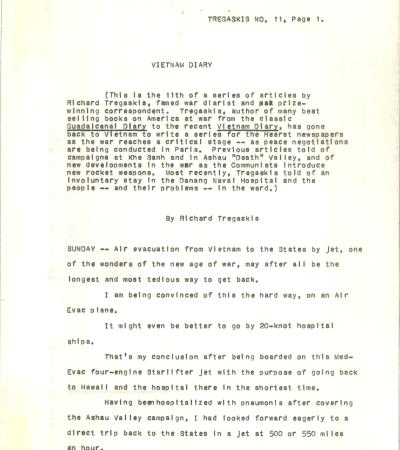
"Vietnam Diary No. 11" by Richard Tregaskis
In this article, Tregaskis describes his slow and uncomfortable medical evacuation by jet from Vietnam to Hawaii after falling ill with pneumonia. Along the way, he details the delays caused by medical precautions, a rocket attack at Danang, and the struggles of severely wounded soldiers being moved to safety.
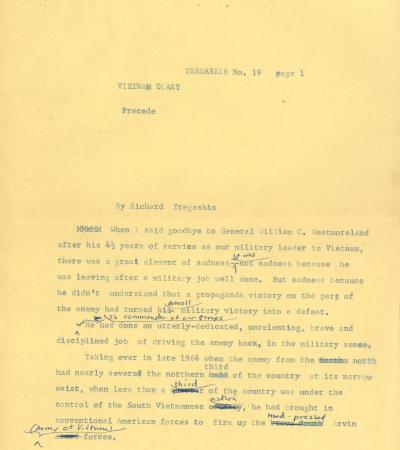
"Vietnam Diary No. 19" by Richard Tregaskis
In this draft article, Tregaskis reflects on General Westmoreland’s leadership in Vietnam, noting his military successes in pushing back the enemy but also how the Tet Offensive’s portrayal in the American press turned that victory into a perceived defeat. He goes on to explain that while U.S. and South Vietnamese forces made steady gains, the lack of strong propaganda and public relations allowed enemy narratives to overshadow battlefield results.
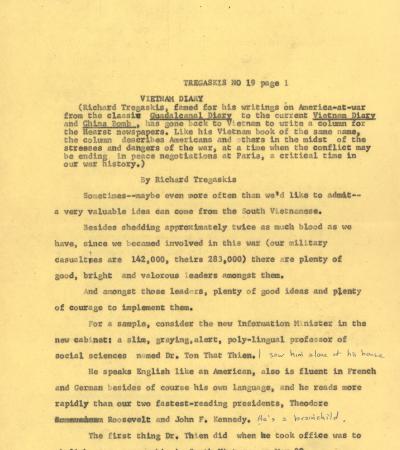
"Vietnam Diary No. 19 - page 1" by Richard Tregaskis
In this draft article, Tregaskis writes about South Vietnam’s new Information Minister, Dr. Ton That Thien, who values freedom of the press as essential to democracy. Dr. Thien, a multilingual professor, abolished press censorship soon after taking office and believes that open media helps people change their government without violence. While acknowledging flaws in South Vietnam’s press, he argues that mature societies accept that newspapers can make mistakes and should remain free from governmental control.
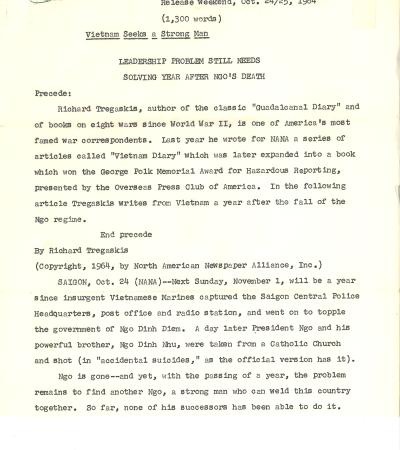
"Vietnam Seeks A Strong Man" by Richard Tregaskis, October 24, 1964
This article, written a year after the fall of South Vietnamese leader Ngo Dinh Diem, describes the nation’s ongoing struggle to find a strong leader who can unite the country. Despite some military successes against the Viet Cong, political instability, public discontent, and repeated coups have weakened the government’s ability to lead effectively.
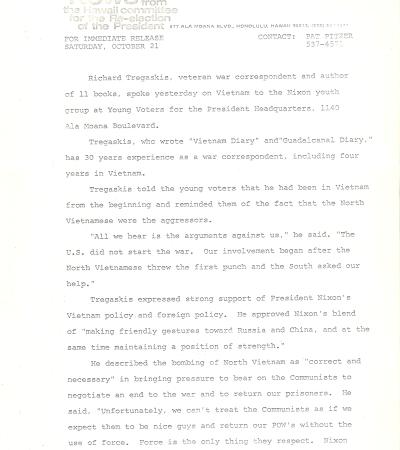
Press Release from the Hawaii Committee for the Re-election of the President
This press release covers Richard Tregaskis' speech to a Nixon Young Voters group. Tregaskis supported President Nixon's Vietnam policy and foreign policy, including the bombing of North Vietnam.
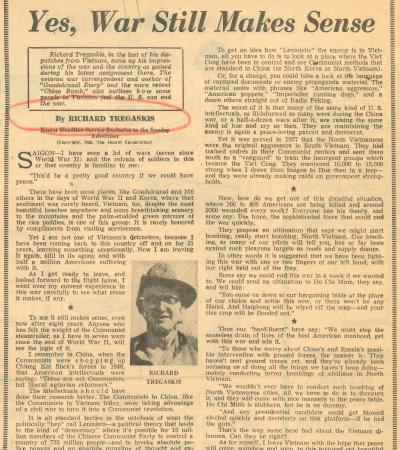
"Yes, War Still Makes Sense" by Richard Tregaskis, Boston Sunday Advertiser, July 7, 1968
Tregaskis reflects on his time in Vietnam and argues that the U.S. should continue fighting to prevent the spread of communism. He compares Vietnam to his past war experiences, criticizes communist ideology, and warns against underestimating leaders like Ho Chi Minh.
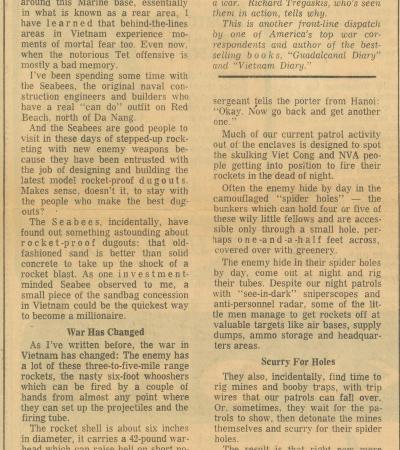
"Seabees Sold on Use of Sand for Dugouts" by Richard Tregaskis, San Francisco Examiner, May 7, 1968
This article describes how U.S. Navy Seabees in Da Nang, Vietnam, discovered that sandbags work better than concrete for protecting dugouts from rocket blasts. It explains how the North Vietnamese Army uses portable, Russian-designed rockets and hidden "spider holes" to attack U.S. positions, often at night.
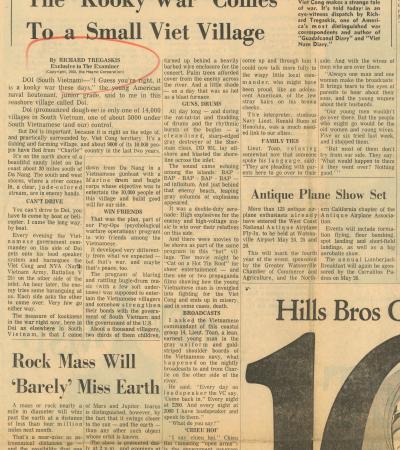
"The 'Kooky War' Comes To a Small Viet Village" by Richard Tregaskis, San Francisco Examiner, May 1, 1968
This article describes the small Vietnamese village of Doi, caught between the Viet Cong and South Vietnamese government forces during the Vietnam War. U.S. troops visited the village to hold a psychological operations program, bringing music, movies, and entertainment to win over the villagers, many of whom are children.
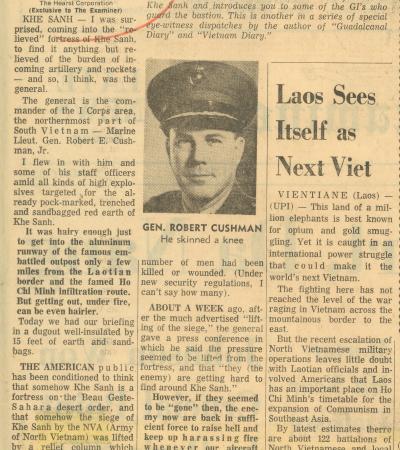
"Reds Still Pour It On At 'Relieved' Fort" by Richard Tregaskis, San Francisco Sunday Examiner & Chronicle, May 5, 1968
This article describes the continued heavy attacks on the U.S. Marine fortress at Khe Sanh, despite reports that the North Vietnamese siege had been lifted. General Robert E. Cushman Jr. and his staff experienced incoming artillery and mortar fire during their visit, with enemy forces still strong and receiving reinforcements from Laos.
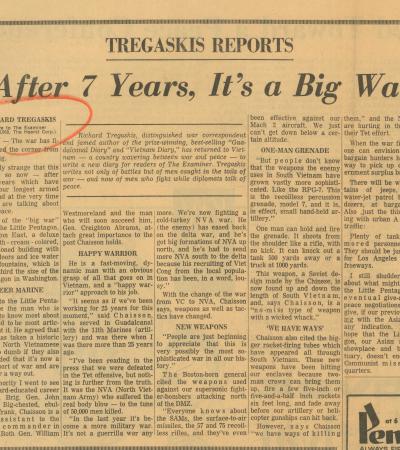
"After 7 Years, It's a Big War" by Richard Tregaskis, San Francisco Examiner & Chronicle, April 21, 1968
This article explains how the Vietnam War has escalated from a small conflict to a large-scale war after seven years. U.S. military leaders describe the shift to a more intense fight against the North Vietnamese Army, with advanced weapons like hand held rocket and grenade launchers.
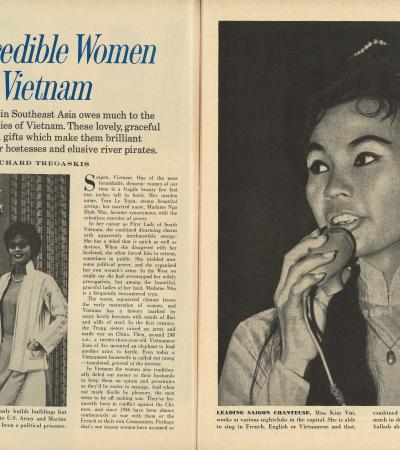
"The Incredible Women of Vietnam" by Richard Tregaskis, Cosmopolitan, June 1964
This article describes the beauty, resilience, and entrepreneurship of Vietnamese women during the Vietnam War. Many played key roles as business owners, military contractors, and bar proprietors, often supporting families while men were away fighting.
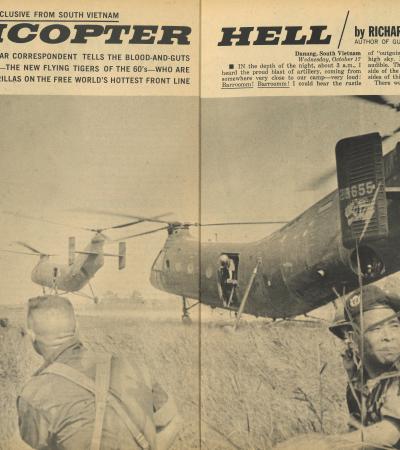
"Helicopter Hell" by Richard Tregaskis, Bluebook, August 1964
The article recounts the dangerous missions of U.S. Marine and Army helicopter crews in Vietnam, highlighting their role in evacuating casualties and supporting combat operations under heavy enemy fire. It describes acts of bravery, such as rescuing downed crews from hostile landing zones and providing medical aid in difficult jungle terrain, often while under attack.
"Vietnam: What's It All About" by Richard Tregaskis, Cosmopolitan, September 1966
This article explains the Vietnam War in the context of world events. It outlines how Vietnam’s history of foreign domination, its division into North and South in 1954, and the growing threat from the Communist North led to U.S. involvement, with the goal of supporting South Vietnam’s independence. It also discusses the daily realities of war for soldiers and civilians, the political and strategic reasons behind American actions, and the challenges of winning both the military fight and the support of the Vietnamese people.
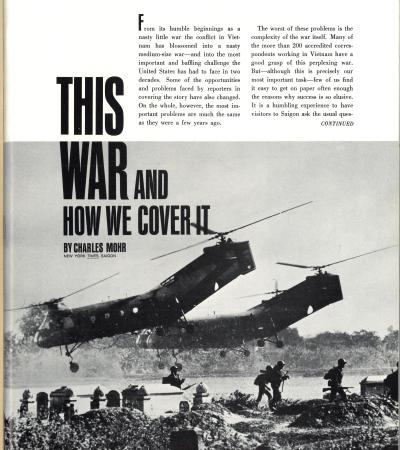
"This War and How We Cover It" by Charles Mohr, Dateline, 1966
This article provides a reporter's perspective on covering the Vietnam War. Journalists faced many challenges, from struggling to reach battle zones to dealing with unreliable military information and poor communication systems.
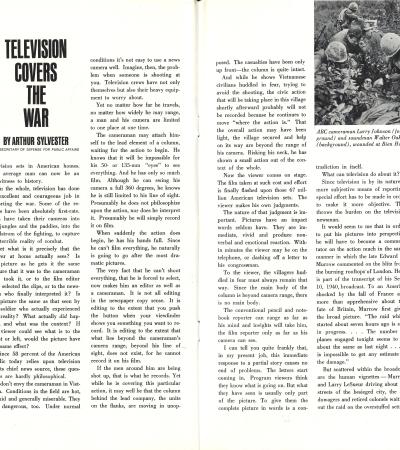
"Television Covers The War" by Arthur Sylvester, Dateline, 1966
The war in Vietnam was the first to be covered on television. This article, by the U.S. Assistant Secretary of Defense for Public Affairs, notes that television has changed how people experience war by letting them see real battles and events as they happen. He explains that camera crews can only show part of the action, often missing important details or giving a narrow view of the full story. Because of this, viewers need to think critically about what they see and ask questions to better understand the truth behind the images.
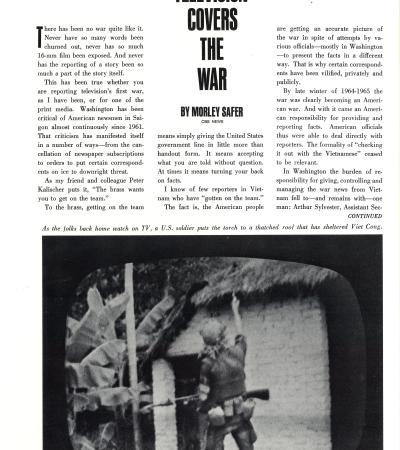
"Television Covers The War" by Morley Safer, Dateline, 1966
Safer, a CBS News war correspondent writes about reporters in Vietnam who tried to show the truth about the war, even when government officials wanted to control what was said. Some leaders expected journalists to only report things that made the U.S. look good. Despite these pressures, television brought powerful images of the war into people’s homes, showing both the pain of soldiers and civilians, and helping Americans understand the harsh realities of the conflict.
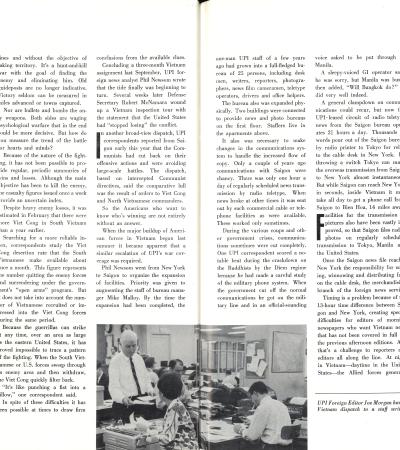
"How The War Looks From The Desk" by Joe W. Morgan, Dateline, 1966
The author of this article notes that reporting on the Vietnam War from an office in Saigon was very difficult because it was hard to know who was winning or even what was really happening. The fighting didn’t follow clear patterns, and reporters had to rely on confusing or delayed information from the field. Even though communication was tough, journalists worked hard to give accurate updates to Americans.
"Profile of the PIO" by Tom Tiede, Dateline, 1966
This article, about the U.S. Army's Public Information Officers (PIO), notes that reporters in Vietnam often found it hard to work with PIOs, who were supposed to help the press. They were often poorly trained and difficult to deal with. Some PIOs quietly shared tips with reporters to help them cover important events, even if it was against the rules.
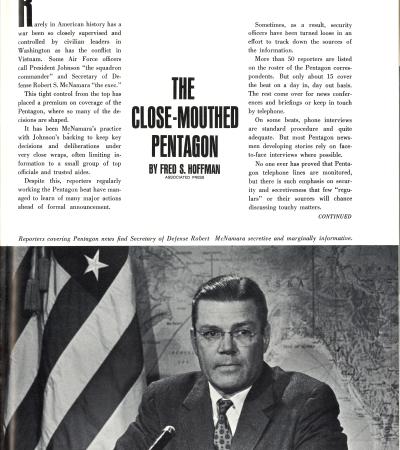
"A Close-Mouthed Pentagon" by Fred S. Hoffman, Dateline, 1966
This article explains that during the Vietnam War, many important decisions were kept secret by top U.S. leaders, making it hard for reporters to get clear information. Journalists covering the Pentagon had to rely on unofficial sources and sometimes had to deal with vague or misleading official statements.
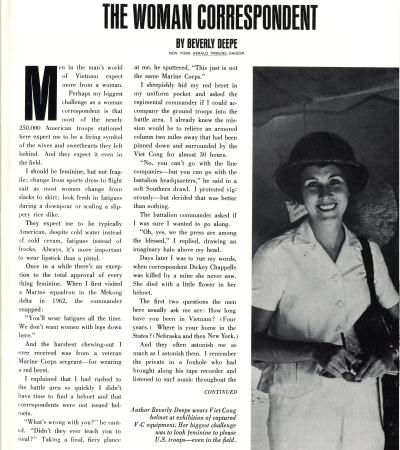
"The Woman Correspondent" by Beverly Deepe, Dateline, 1966
This article if reflective of attitudes towards women in the 1960s. It explains that being a woman reporter in the Vietnam War meant facing special challenges, like having to look feminine for the troops while also doing tough and dangerous work. Some soldiers and commanders were supportive, while others were skeptical or overprotective, making it harder for women to report from the front lines.
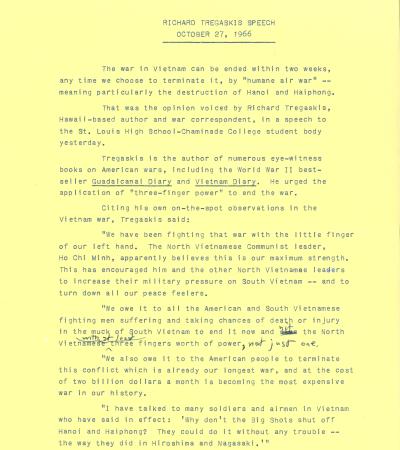
Richard Tregaskis Speech, October 27, 1966
In this speech, Tregaskis expresses his opinion that the war in Vietnam could be ended within two weeks if the U.S. launched a major bombing campaign against Hanoi and Haiphong in communist North Vietnam.
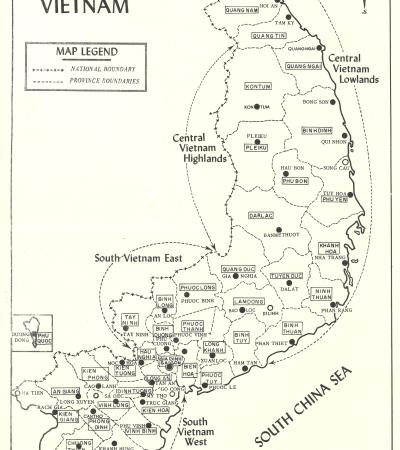
Map of the Republic of Vietnam, January 15, 1964
This map shows the provinces and significant towns of South Vietnam.
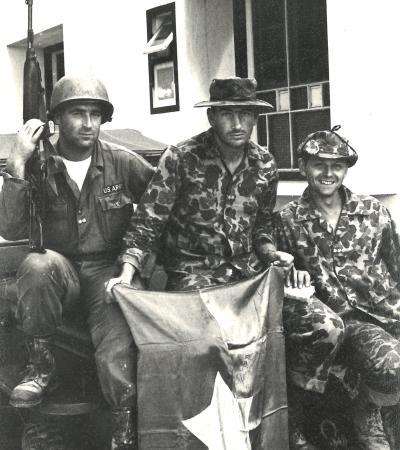
Photograph of Troops With Captured Viet Cong Flag
Three American infantry advisors pose with a captured Viet Cong communist flag after an assault operation against Viet Cong guerrillas. They are pictured outside their barracks, where they stay when they are not out on assault operations in the high mountain jungles.
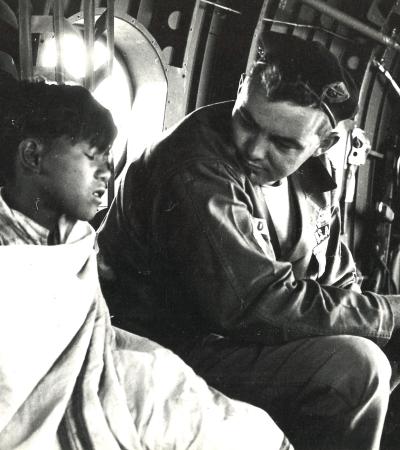
Photograph of U.S. Medic with Montagnard Boy
U.S. Special Forces medic John "Doc" Colin watches over a Montagnard boy with a broken leg. Medical treatment is scarce in the region of Vietnam where the Montagnards live, and the Special Forces medics build goodwill taking care of the injured and sick.
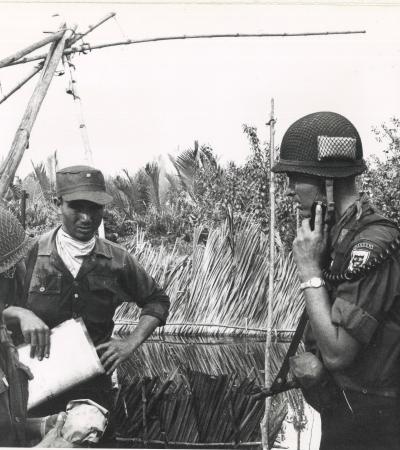
Photograph of U.S. Army Ranger and Vietnamese Army Lieutenant
After an assault operation against Viet Cong guerrillas, Captain Richard A. Jones makes a radio call to helicopters to pick up the strike force which has completed their mission. Standing with Jones are an Sergeant Dat, an interpreter and Lieutenant Van of the South Vietnamese army.
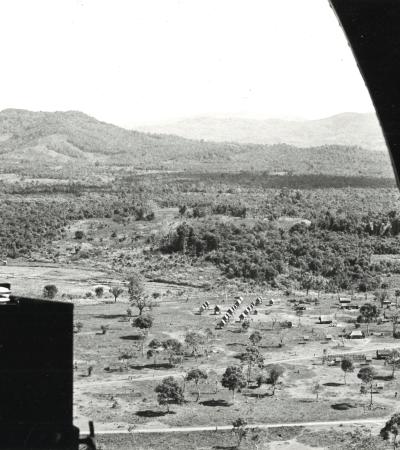
Photograph of the Montagnard Village of Plei Mrong
This helicopter eye's view shows a Montagnard village, where the houses are raised on stilts. A U.S. Army special force detachment of 14 men has trained a force of more than 200 Montagnards to protect the village. It is surrounded by Viet Cong territory.
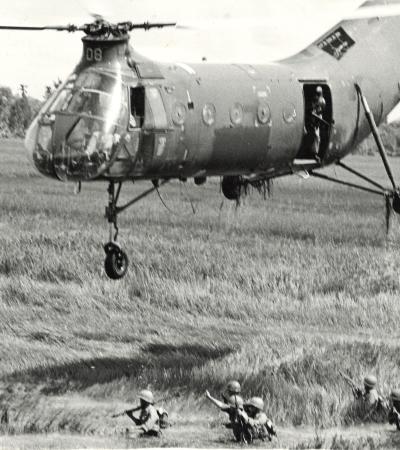
Photograph of American Helicopter and South Vietnamese Troops in Vietnam
South Vietnamese troops hunt for North Vietnamese guerrillas while a U.S. helicopter watches over them.
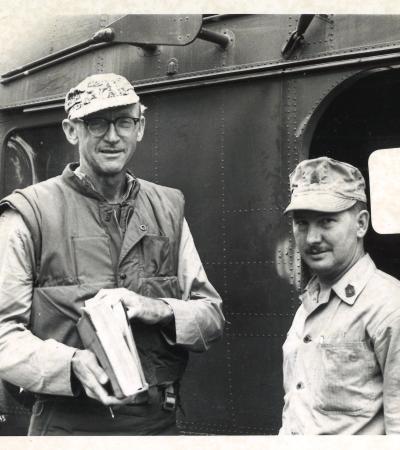
Photograph of Richard Tregaskis
War correspondent Richard Tregaskis stands in front of a U.S. Marine helicopter with Master Sergeant George Peart, who is a gunner and crew chief on assault missions with the Marines.
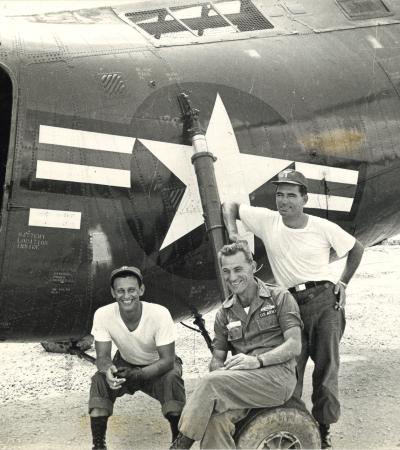
Photograph of U.S. Military Officers
Captain Don Finney, Major Allan Galfund and 1st Lieutenant Lew Stone at Vinh Long, Vietnam during combat support operations against the Viet Cong.
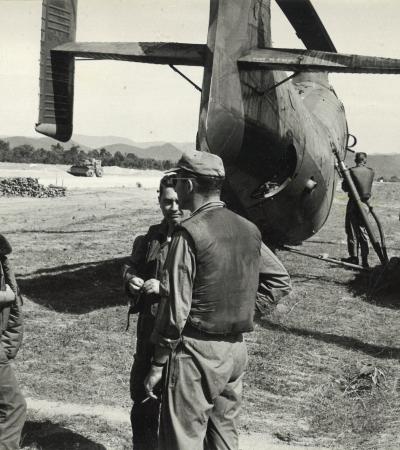
Photograph Near Dak To Vietnam
New York Times correspondent Pamela Sanders talks to members of a U.S. Army helicopter crew near Dak To, Vietnam.
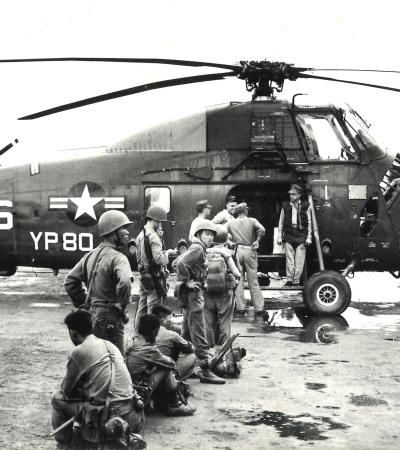
Photograph of Helicopter And Troops in Vietnam
Troops line up beside a Marine helicopter before a mission. To the right in the photo is Captain Frank Allgood, of Fort Scott, Kansas.
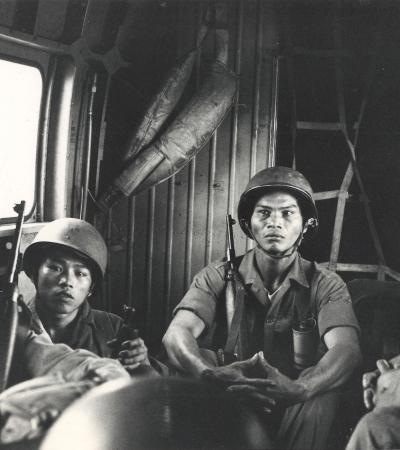
Photograph of Vietnamese Troops
South Vietnamese troops in a U.S. Marine helicopter, heading for an assault into Vietcong territory.
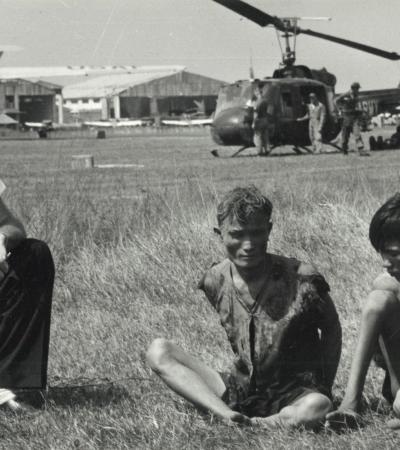
Photograph of Richard Tregaskis and Viet Cong
Richard Tregaskis stands next to three Viet Cong prisoners after an assault mission. The Viet Cong had succeeded in shooting down a U.S. helicopter during the assault.
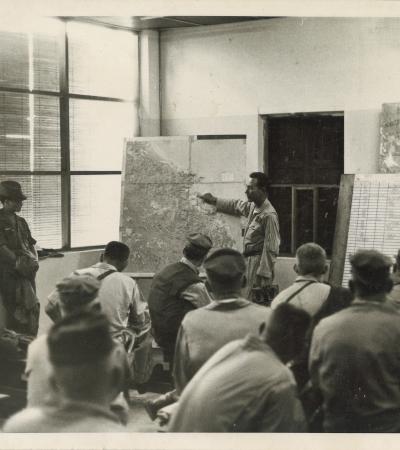
Photograph of Military Briefing
Lieutenant Colonel Robert L. Rathbun, a Marine squadron commander in Danang, Vietnam, briefs troops before an assault mission.
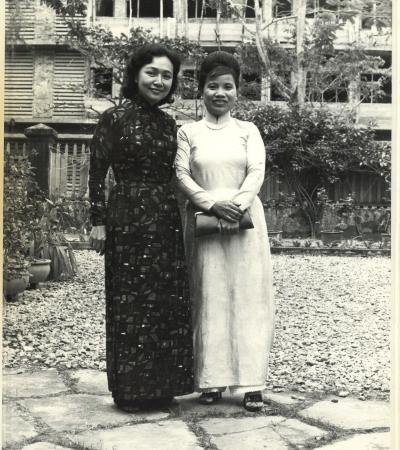
Photograph of Two Vietnamese Contractors
Lam My Bach Tuyet (left) and Agnes Nam (right) both own Vietnamese construction businesses and are military contractors. They have built base structures and housing for U.S. Army and Marine detachments in Dananag, Vietnam. Behind them is the half-finished International Hotel which Tuyet is building to house U.S. Army officers.
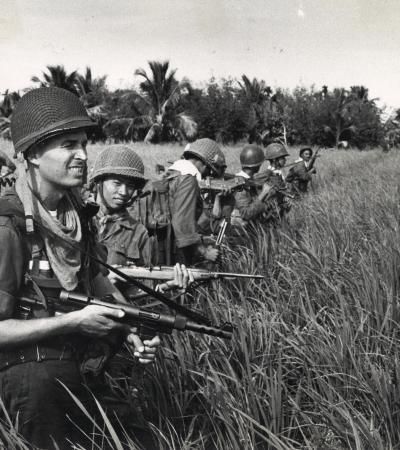
Photograph of U.S. Army Captain and Vietnamese Troops
U.S. Army Ranger Captain Richard A. Jones, an infantry advisor from Berkeley, California, leads part of Eagle Force through the fields in Vietnam. Eagle Force was a small elite group of South Vietnamese troops transported into battle by U.S. helicopters.
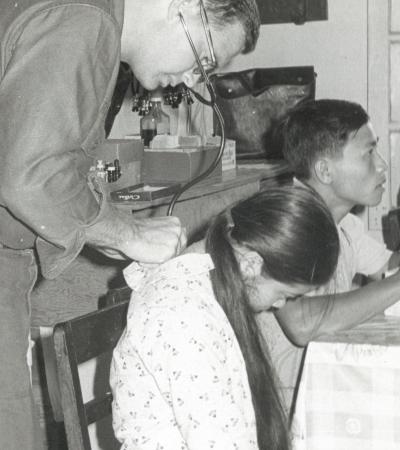
Photograph of U.S. Military Doctor Examining a Vietnamese Patient
U.S. military Doctor Lieutenant D.J. Rushforth examines a patient during a Medical Civic Action Program (MEDCAP). MEDCAP was run by the U.S. military to provide medical care for Vietnamese civilians with the aim of building goodwill among the South Vietnamese.
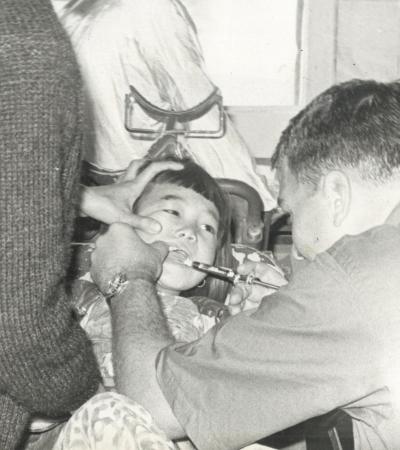
Photograph of U.S. Military Dentist Treating a Vietnamese Patient
U.S. military dentist Lieutenant D.A. Molloy from Chicago, Illinois, injects novocaine just prior to doing some dental work on a patient at the Sacred Heart Orphanage located in Da Nang East, Vietnam. Tens of thousands of Vietnamese children became orphans over the course of the Vietnam War. Molloy and other U.S. military medical professionals are part of the Medical Civic Action Program (MEDCAP).
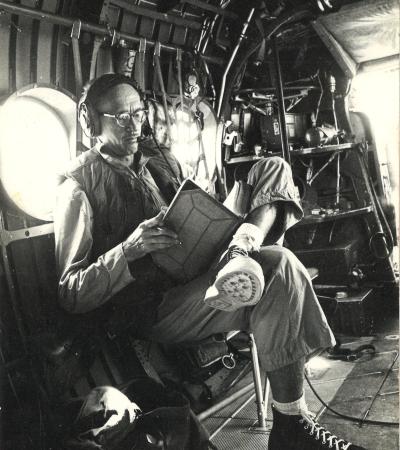
Photograph of Richard Tregaskis in a Helicopter
War correspondent Richard Tregaskis rides in a U.S. Army helicopter which is on an assault mission.
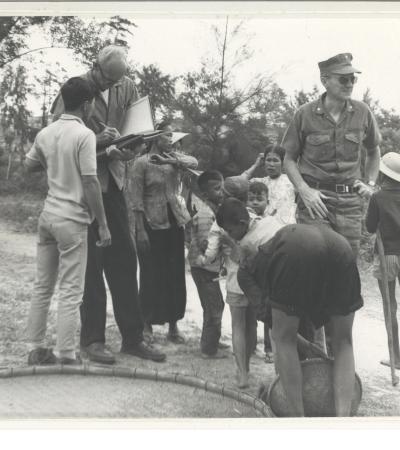
Photograph of My Thi Villagers with Richard Tregaskis
War correspondent Richard Tregaskis takes notes on rice harvesting during a visit to the My Thi village near Da Nang, Vietnam. He is accompanied by U.S. Naval Commander Richard A. Bowers.
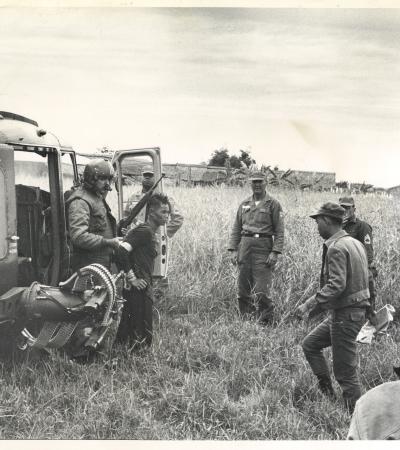
Photograph of Capture of Viet Cong Prisoner
This Viet Cong prisoner has been captured by the South Vietnamese Army (ARVN) south of Saigon. He was transported by a U.S. Army helicopter from the battlefield so that he could be transferred to the South Vietnamese Army for questioning. The captive is shown here with U.S. Army Sergeant Alfred Compton (left) and U.S. Army Specialist Joseph Reed (center) and unnamed members of the ARVN.